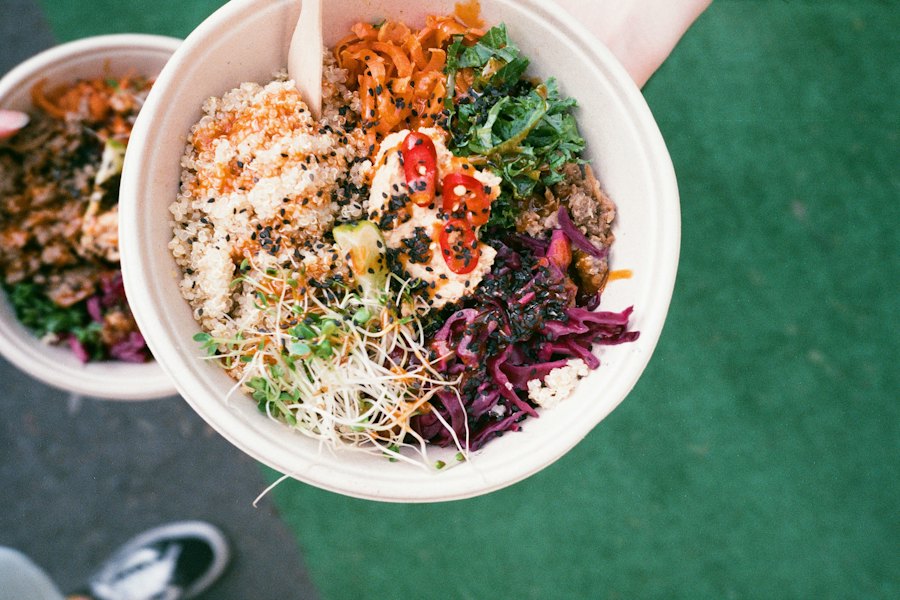
You don’t need to weigh food or count anything to eat in a balanced way. A simple plate model gives you a starting point that works with the foods you already cook, from a quick lunch to a family curry.
The simple plate model
Harvard’s Healthy Eating Plate is a simple visual guide to a balanced meal. It splits a plate roughly like this:
- Half: vegetables and fruit. Go for variety and colour.
- A quarter: whole grains. Brown rice, oats, wholegrain bread or pasta, quinoa.
- A quarter: protein. Fish, chicken, beans, lentils, eggs, tofu or yoghurt.
- A little healthy fat. Olive or rapeseed oil, nuts, seeds or avocado, in moderation.
- Water to drink. Tea and coffee count too.
One detail surprises people: on the Healthy Eating Plate, potatoes don’t count as vegetables. Treat them as the starchy part of your meal instead.
Build it in four steps
- Start with vegetables. Fresh, frozen and tinned all count. A side salad, a handful of spinach stirred into a sauce or a tray of roasted vegetables all work.
- Add a protein. It makes a meal more satisfying. A palm-sized portion of meat or fish, two eggs or a generous serving of beans or lentils is a good guide.
- Add a whole grain or starchy carb. Roughly a quarter of the plate, a little more if you’re very active or hungry.
- Finish with flavour. A drizzle of olive oil, a sprinkle of seeds, fresh herbs, lemon or a spoon of yoghurt makes simple food taste good.
Real examples
Most meals aren’t neatly divided on a plate. Here’s how to balance dishes many of us eat every week. The trick is to ask what’s missing, then add it.
| Meal | Often missing | Easy fix |
|---|---|---|
| Dal with rice | Vegetables | Stir spinach into the dal, or serve with a cucumber and tomato salad |
| Pasta with tomato sauce | Protein and vegetables | Add lentils, tuna or chicken, plus a handful of greens or frozen peas |
| Chicken curry with naan | Vegetables | Add peppers, spinach or cauliflower to the curry, or a side salad |
| Vegetable soup | Protein | Add beans or lentils, or have it with egg or hummus on wholegrain toast |
| Wraps and sandwiches | Vegetables | Fill half the wrap with salad, grated carrot or roasted vegetables |
| Toast for breakfast | Protein | Top with eggs, cottage cheese or nut butter, and add a piece of fruit |
What about snacks?
Snacks tend to be more satisfying when they pair fibre with a little protein. A few easy combinations:
- Apple slices with peanut butter
- Greek yoghurt with berries and seeds
- Hummus with carrot and cucumber sticks
- A boiled egg and a piece of fruit
- A small handful of nuts with a few dried apricots
A guide, not a rule
The plate is a starting point. How much you need depends on your appetite, how active you are and your stage of life, and some meals will look nothing like it. That’s fine. Look at the balance across your day and your week, not one perfect plate.
If you have a medical condition, are pregnant or have specific dietary needs, check with your doctor or a registered dietitian before making big changes.
Make it easier with a little prep
Balanced meals are much easier when part of the work is done ahead. A tray of roasted vegetables, a pot of grains and a batch of cooked protein can become three or four different meals. My free guide, Meal Prep Made Simple, walks you through a simple formula and grocery list to get started.
Sources
- Harvard T.H. Chan School of Public Health, The Nutrition Source. Healthy Eating Plate. nutritionsource.hsph.harvard.edu
This article is general information, not medical advice. Always talk to your doctor, midwife or a registered dietitian about your own health.

Rivekka is a nutrition coach and the founder of Rivekka Wellness. She helps women build healthier habits through simple, balanced nutrition that fits real life.
More about Rivekka